
Gospel Q&A is a series from LDS Daily that strives to answer important gospel questions from readers. Today, we answer the question, “What Is a Solemn Assembly?”
A solemn assembly is a special, sacred meeting held for specific holy purposes as directed by Church leadership. A Church Newsroom topic essay titled “Solemn Assembly” explains that these purposes include sustaining a new President of the Church, dedicating temples and other significant buildings, introducing new scripture, and providing instruction to priesthood leaders.
That same resource teaches that participants should come with “an elevated sense of spirituality,” signaling that these gatherings require more than routine attendance. As explained in a December 1988 Ensign article by Robert J. Norman, solemn assemblies are intended to enhance the Saints’ spirituality and give added emphasis to the sacred purpose of the gathering.
Where Did Solemn Assemblies Come From?

The phrase “solemn assembly” comes from the Hebrew Bible and describes sacred gatherings associated with major religious observances such as Passover and the Feast of Tabernacles. The Church History article explains that these gatherings marked significant moments when the people of God came together to worship and renew their covenant relationship with Him.
This pattern also connects directly to temple worship. Both the Church Newsroom and Church History resources note that the dedication of the first temple in Jerusalem took place during a solemn assembly, linking the term with sacred space and covenant renewal.
In the Restoration, the Lord reestablished this pattern and commanded the Saints to “call your solemn assemblies” (Doctrine and Covenants 133:6). That command found clear fulfillment in Kirtland, where the Saints gathered in a solemn assembly as part of the temple dedication in March 1836.
The Church History account records that this gathering included sustaining Church leadership, the offering of the dedicatory prayer, and powerful spiritual manifestations among those in attendance. Steven C. Harper notes that these assemblies were closely tied to preparing the Saints to receive spiritual power and instruction that would enable them to carry the gospel to the world.
They were also connected to the Lord’s promise that sanctified Saints could ultimately come into His presence, making them moments of both preparation and expectation anchored to temple blessings.
What Actually Happens During a Solemn Assembly?
A solemn assembly follows a specific, ordered pattern that reflects the structure of the Church and emphasizes unity. During a sustaining assembly in general conference, participation occurs in a deliberate sequence.
In the November 1994 General Conference, Elder David B. Haight explained that priesthood quorums stand and manifest by uplifted hand their willingness to sustain the President of the Church as prophet, seer, and revelator, followed by the general body of the Church. He emphasized that this pattern was established by the Prophet Joseph Smith.
This process reinforces doctrine through action. Elder Haight taught that when members raise their hands, they “covenant with God” to follow the prophet’s counsel, making sustaining an act of commitment rather than acknowledgment.
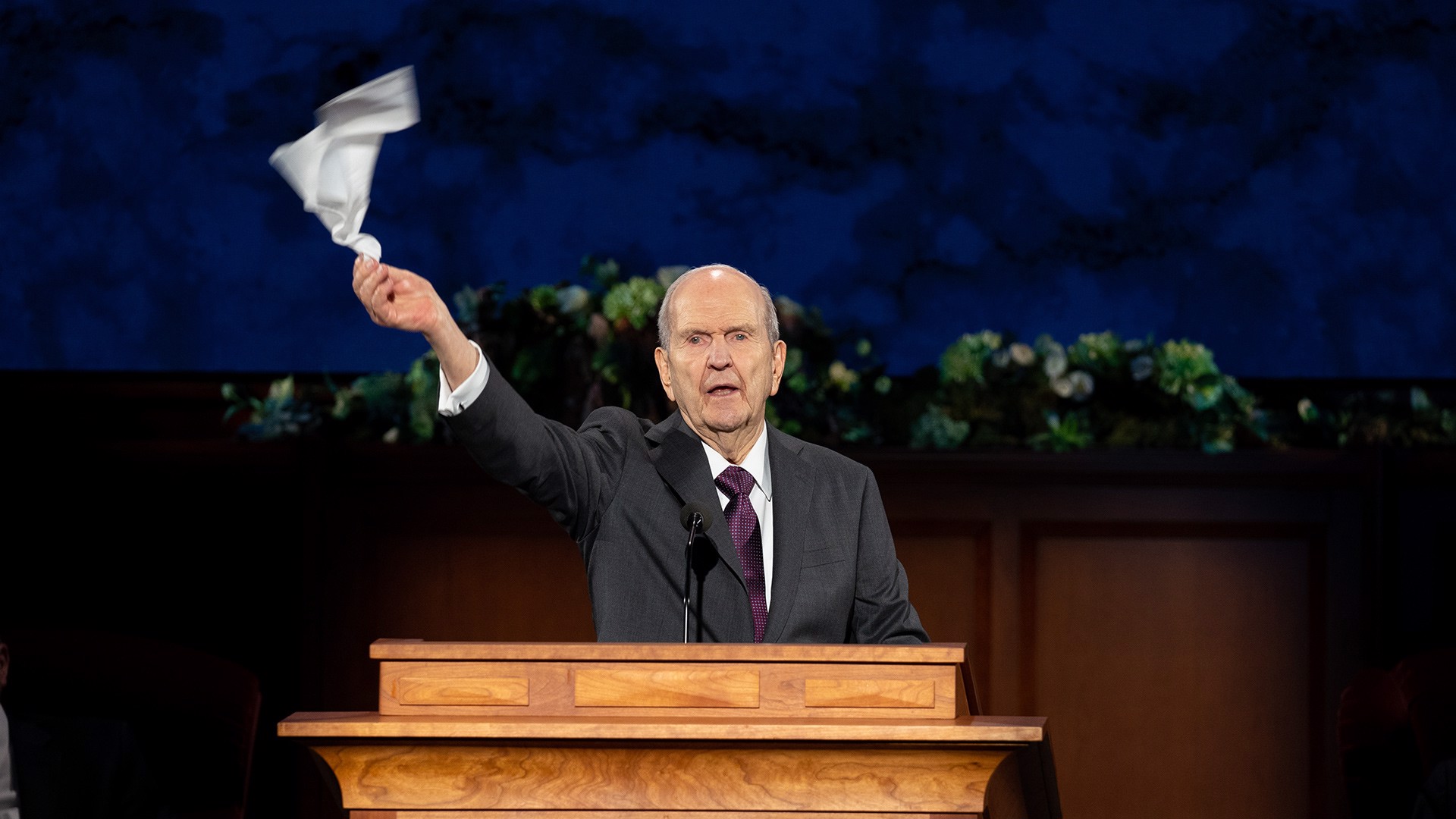
In some solemn assemblies, particularly those connected to temple dedications or other significant sacred occasions, participants may also take part in unified expressions of praise such as the Hosanna Shout. This expression originates with the Savior’s triumphal entry into Jerusalem on Palm Sunday.
While closely associated with modern temple worship, the Hosanna Shout is also used in broader Church settings tied to moments of collective worship and covenant unity.
Why Does the Church Hold Solemn Assemblies Today?
Solemn assemblies continue because they fulfill specific purposes tied to key moments in the life of the Church. The Church Newsroom topic outlines several of these purposes, including leadership transitions, temple dedications, and other sacred gatherings that require unified participation.
The December 1988 Ensign article adds that solemn assemblies have also been held for instruction and for emphasizing important doctrines, including an 1889 gathering in which President Lorenzo Snow presented the law of tithing to the Saints.
These gatherings create unity at critical moments. As the article explains, each President of the Church has been sustained by the priesthood of the Church in a solemn assembly, reinforcing a consistent pattern of common consent and collective witness.
How Should Members Prepare for a Solemn Assembly?

Preparation for a solemn assembly begins before the meeting itself. The Church Newsroom topic emphasizes that participants should come with an elevated level of spirituality, suggesting deliberate spiritual preparation rather than casual attendance.
That preparation includes personal sanctification. In revelations connected with early solemn assemblies, the Lord commanded the Saints to “sanctify yourselves” and “cast away your idle thoughts” (Doctrine and Covenants 88:68–70).
As recorded in the Ensign article, the Prophet Joseph Smith instructed participants to solemnize their minds and remove evil from their thoughts and actions, teaching that the Holy Ghost “would not dwell in unholy temples.” This counsel underscores that preparation for a solemn assembly requires both inward reflection and outward commitment.
Why Does This Matter for Everyday Discipleship?
The impact of a solemn assembly extends beyond the meeting itself. The commitments made in that setting shape how members live their discipleship in practical and ongoing ways.
If sustaining is a covenant, it requires continued action. It influences how members respond to prophetic counsel, how they speak about Church leadership, and how they support the work of the Church in their daily lives.
Solemn assemblies also reinforce a central principle of the Restoration: the Lord leads His Church through a unified, covenant people. He invites His followers to act together under His direction, creating strength and clarity that cannot exist in isolation.
—
Disclaimer: While responses draw on scripture and the teachings of modern prophets, LDS Daily is not an official publication of The Church of Jesus Christ of Latter-day Saints. The answers shared are not intended to be comprehensive but are offered in the spirit of faith and a sincere desire to share hope and gospel-centered perspectives with those seeking truth.
What gospel question would you like us to tackle next? Share your ideas in the comments below!

Holly Wallace is a writer and storyteller drawn to meaningful questions and overlooked details. Her work explores Latter-day Saint life and culture through faithful inquiry, inviting readers to pause, consider, and engage more deeply with what matters most.