Temple garments are sacred and intimate to Latter-day Saints, but that doesn’t stop the fascination from others. By understanding the history of our faith and ordinances, we can be more empowered to share in an appropriate way.
Plus, these facts are just super interesting! So, here is a deeper dive into the history of temple garments that will surprise you and strengthen your faith.
But First, Here’s a Quick Primer on What Temple Garments Are
Temple garments are simple undergarments, usually in two-pieces, that are an emblem of sacred promises made with God. Sacred marks on the garments provide other symbolic reminders and point to Jesus Christ.
Gammadiae
There is historical precedence for sacred marks on Christian garments in the form of gammadiae.
 A closeup of a mosaic in the Basilica of Sant’Apollinare in Ravenna, Italy. The Christian saints and prophets depicted wear robes with gammadiae. | Courtesy of LiturgicalArtsJournal.com
Gammadiae are ancient decorative symbols, often in the form of small, embroidered or woven geometric designs resembling the shape of the Greek letter gamma (Γ).
These symbols were commonly used on early Christian and Roman clothing, particularly on tunics, cloaks, and other garments, as ornamental accents. They are believed to have held religious or cultural significance, possibly representing protection, divine favor, or eternal life.
Home-Made Garments
The first temple garments were homemade and resembled the common union suit style of underwear. It was one piece and went to the ankles and wrists. Sacred marks were originally cut into the garments.
William Clayton described some of this process in his personal journal on December 16, 1845.

He said, “Sisters Whitney and Kimball have been very busy through the day overseeing the washings and anointings in the female department, and instructing the Sisters in cutting and making robes and garments.”
Eliza M.A. Munson, the granddaughter of early pioneers, related some of her family’s history involving the first garments:
“It was while they were living in Nauvoo that the Prophet came to my grandmother, who was a seamstress by trade, and told her that he had seen the Angel Moroni with the garments on, and asked her to assist him in cutting out the garments.
“They spread unbleached muslin out on the table and he told her how to cut it out. She had to cut the third pair, however, before he said it was satisfactory. She told the prophet that there would be sufficient cloth from the knee to the ankle to make a pair of sleeves, but he told her he wanted as few seams as possible and there would be sufficient whole cloth to cut the sleeve without piecing.
“The first garments were made of unbleached muslin and bound with turkey red and were without collars. Later on the Prophet decided he would rather have them bound with white. Sister Emma Smith, the Prophet’s wife, proposed that they have a collar on as she thought they would look more finished, but at first the Prophet did not have the collars on them.
“After Emma Smith had made the little collars, which were not visible from the outside, then Eliza R. Snow introduced a wider collar on the finer material to be worn on the outside of the dress. The garment was to reach to the ankle and the sleeves to the wrist. The marks were always the same.”
The Proper Use of Garments
From the beginning of temple worship in the latter days, there have been questions about the proper use of garments. These questions surely feel relatable to us today.
Here is one example. On April 26, 1895, President George Q. Cannon recorded the following experience in his personal journal:
“Brother Earl, a Salt Lake fireman, came to see us concerning dispensing with the use of his garments. He described his position and the labor he had to perform, which required him to strip and to wear tight underclothing, and he could not do this and wear his garments. The exercises which required him to strip were three times a day. After conversing with him upon the matter, we felt that under the circumstances, if he would take the risk, he might dispense with his garments in the daytime, but wear them at night. This was President Woodruff’s view of the question.”
Stories of Protection
The magical moniker sometimes attributed to temple garments might come from folk tales of people who have been protected because they were wearing their garments. These types of stories go all the way back to the early days of Church history and Joseph Smith himself.
 Willard Richards
 was the only person incarcerated at Carthage Jail alongside Joseph Smith to be unharmed. Stories would be shared that part of his protection came from his refusal to take off his temple garments.
Oliver B. Huntington was a member of the early Church and wrote his own history down. He related the following encounter from April 22, 1897:
“My niece Zina Card and sister Lucy B. Young came on their return from Goshen and the other settlements in this county south of here and stayed all night with us. They were out by appointment from the Presidency of the Church in the interests of the young woman’s Journal.”
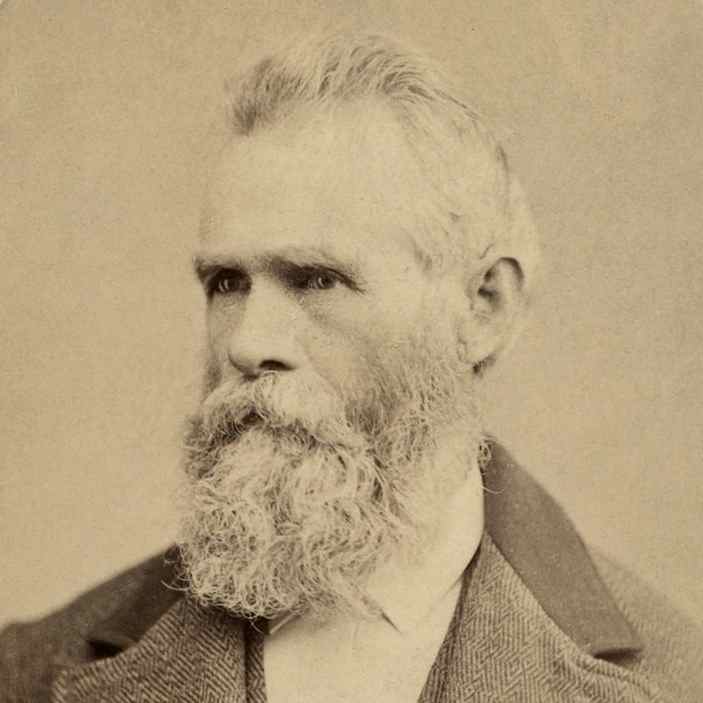 Oliver Boardman Huntington | Courtesy of ChurchofJesusChrist.org
“We had an excellent time while they were here talking over old times, the sayings of Joseph and Hyrum and Brigham and others. Among other things both new and old was repeated the fact that the Prophet Joseph pulled off his garments just before starting to Carthage to be slain and he advised Hyrum and John Taylor to do the same, which they did; and Brother Taylor told Brother Willard Richards what they had done and advised him to take off his also, but Brother Richards said that he would not take his off, and did not; and he was not harmed.”
“Joseph said before taking his garments off, that he was going to be killed…’was going as a lamb to the slaughter’ and he did not want his garments to be exposed to the sneers and jeers of his enemies. These facts all came from President John Taylor’s lips after he was President of the Church. Elder John Morgan had told them to me as stated to him by Brother Taylor. Sister Lucy B. Young said that Brother John Taylor told her in answer to direct questions, the same all except with regard to Willard Richards.”
First Major Garment Changes
While minor changes had been made to temple garments, the first major change came in June 1923. Under the direction of the First Presidency, members and manufacturers of garments were given permission to make certain modifications. They were:
- Sleeves could end at the elbow
- The pant leg could be shortened to just below the knee
- Permitted the use of buttons
- The collar could be removed
- The crotch area was closed
Also of importance was the material. According to the Salt Lake Tribune, “instead of the old style, coarse, unbleached, irritating material of which temple garments were once made, the finer knitted goods, and even silks, are now used.”
 A headline from the Salt Lake Tribune announcing the changes. | Courtesy of Utah Digital Newspapers
The Church stressed that all such alterations were optional and members could choose what they preferred.
Various Garment Vendors
In 1936, the Deseret Clothing Factory (later Beehive Clothing) was created by the Church to manufacture garments. However, four additional commercial companies were given licenses to manufacture and sell garments as well.
The companies were assigned a Church member who was in charge of adding the sacred marks. This practice lasted from 1938-1960.
These companies would advertise their garments in publications and compete with others. Here are just a few:
 Young Woman’s Journal – October 1913
 Another advertisement from a different company from the October 1913 Young Woman’s Journal.
 The Improvement Era – March 1920
Short Sleeves Make Their First Appearance
In 1938, the First Presidency reiterated the approved modifications from 1923 with one big change—instead of just to the elbow, garments could be short-sleeved. It is likely this change had already been put into practice and was confirmed by the official guidance.
Garments were still one-piece and “side-leg or shoulder openings may be provided instead of front and back openings, or any combination of these openings is permissible,” according to the First Presidency comments.
Relief Society Distribution
By March 1977, the Church had officially assumed full responsibility for the manufacturing and distribution of temple garments. Barbara B. Smith, General President of the Relief Society, answered a question about where Latter-day Saints could get their sacred clothing in an issue of the New Era magazine:
“By assignment of the First Presidency, the Relief Society is the exclusive distributor of all such clothing. This action was taken to safeguard the sacred nature of temple clothing and to make it more conveniently available to Latter-day Saints who have received or who are about to receive their endowments.”
Temple Garments Today
The Church introduced two-piece garments in 1979. New materials and variations quickly evolved, resulting in the temple garments Latter-day Saints are most likely familiar with today.
Here are some of the notable changes since that time:
- In 2018, the Church launched a new stretch cotton material.
- In 2022, military garments were discontinued, but a new marking service was made available.
- In 2024, sleeveless and slip skirt garment styles were tested in hot climates and are anticipated to be released to the general public in late 2025.
 Women’s Light Nylon Full Slip | ChurchofJesusChrist.org
The history of temple garments is full of fascinating stories and meaningful evolution. It’s a reminder that while practices may change, the covenants we make with God remain constant and sacred.
Understanding where these traditions come from can help us feel more connected to our faith and inspire us to approach our worship with deeper meaning. What surprised or inspired you most?

Aleah is a graduate of Southern Virginia University, where she studied English, Creative Writing, and Dance. She now works full time as a marketing and product manager, writer, and editor. She currently hosts the podcast “Single to the Glory” about singlehood in The Church of Jesus Christ of Latter-day Saints. Aleah served a mission in California and loves baking, Lang Leav poetry, Gaynor Minden pointe shoes, and Bollywood movies.