
Temples hold a central place in the faith and worship of the Church of Jesus Christ of Latter-day Saints. These sacred structures are considered the House of the Lord, where the most sacred ordinances and covenants are performed.
And there shall be a tabernacle for a shadow in the daytime from the heat, and for a place of refuge, and a covert from storm and from rain. —2 Nephi 14:6
The history of these temples is rich and profound, reflecting the Church’s growth and global expansion. Today, the building of temples around the world signifies not only the Church’s growth but also the fulfillment of prophecies and the increased accessibility of sacred ordinances to members everywhere.
The Beginnings: Kirtland and Nauvoo Temples
The history of Latter-day Saint temples began with the construction of the Kirtland Temple in Ohio, dedicated in 1836. This first temple served as a place of worship, learning, and a site for important early church events, including the appearance of Jesus Christ and other heavenly beings to Joseph Smith and Oliver Cowdery, as recorded in Doctrine and Covenants 110. The Kirtland Temple symbolized the Saints’ faith and commitment to building God’s kingdom.
Organize yourselves; prepare every needful thing; and establish a house, even a house of prayer, a house of fasting, a house of faith, a house of learning, a house of glory, a house of order, a house of God; —Doctrine & Covenants 88:119
Following the Kirtland Temple, the Nauvoo Temple in Illinois was dedicated in 1846. The Nauvoo Temple introduced ordinances such as baptism for the dead and the endowment, which remain central to temple worship today. The construction of these early temples amidst persecution and hardship demonstrated the early Saints’ devotion and sacrifice.

The Utah Era: Expansion in the West
After the Saints’ migration to the Salt Lake Valley, the construction of temples became a priority under Brigham Young’s leadership. The Salt Lake Temple, dedicated in 1893, took 40 years to complete and stands as a symbol of the Saints’ faith, perseverance, and craftsmanship. Other temples followed, including the St. George, Logan, and Manti temples, which served the growing membership in the American West.
These temples were essential not only for their spiritual functions but also for uniting the members in shared efforts and sacrifices. The construction of these temples during this period reflected the Church’s stabilization and growth in its new home.
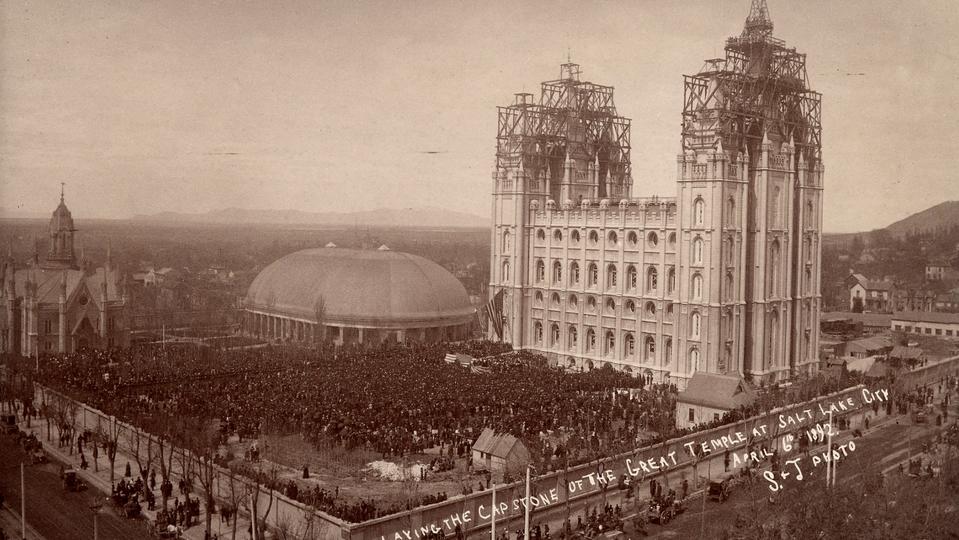 The laying of the capstone of the Salt Lake Temple in 1892.
20th Century and Beyond: Global Expansion
The 20th century saw a significant expansion of temple building as the Church grew internationally. President David O. McKay and subsequent Church leaders emphasized the need for temples to be accessible to members worldwide. The dedication of the Bern Switzerland Temple in 1955 marked the first temple built in Europe, symbolizing the Church’s commitment to a global restoration of the gospel of Jesus Christ.
President Spencer W. Kimball further accelerated temple construction with a vision of bringing temples to Saints in all parts of the world. This vision included the smaller, standardized temple design introduced by President Gordon B. Hinckley, which made it feasible to build temples in more diverse locations.
If temple ordinances are an essential part of the restored gospel, and I testify that they are, then we must provide the means by which they can be accomplished. All of our vast family history endeavor is directed to temple work. There is no other purpose for it. The temple ordinances become the crowning blessings the Church has to offer. —President Gordon B. Hinckley
The Significance of Worldwide Temples Today
Today, there are over 170 operating temples, with many more announced or under construction. The significance of temples being built around the world cannot be overstated. This expansion fulfills prophecies about the gospel reaching every nation and kindred, as mentioned in scriptures like Isaiah 2:2 and Revelation 14:6. It symbolizes the global nature of the Church and its mission to gather Israel from all corners of the earth.
Temples allow us to participate in sacred ordinances and make covenants that are central to our faith and eternal progression. As President Russell M. Nelson has emphasized, “The temple lies at the center of strengthening our faith and spiritual fortitude because the Savior and His doctrine are the very heart of the temple.”
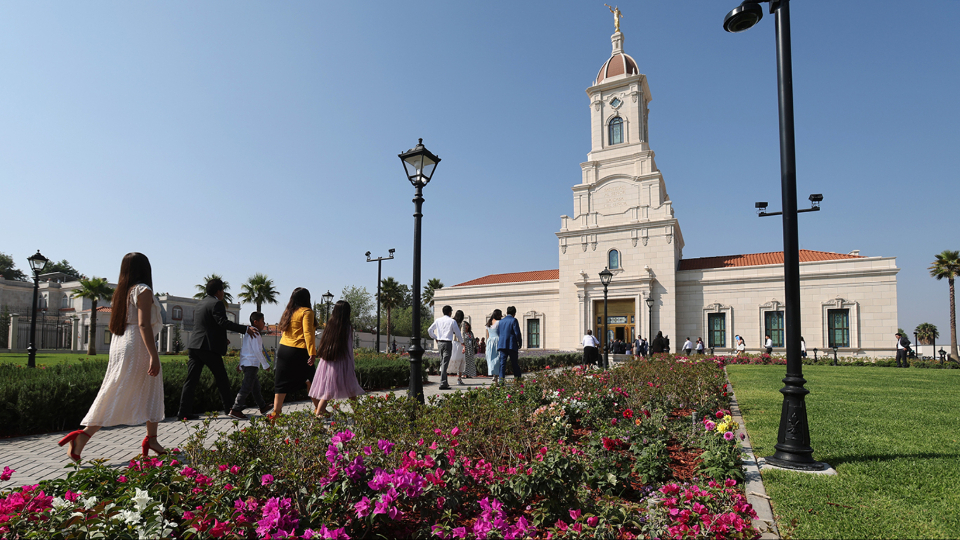
Increased Accessibility and Spiritual Blessings
Building temples worldwide ensures that members have more direct access to these sacred ordinances without the need for long and costly travel. This accessibility is particularly significant for members in developing countries or regions with smaller Church populations. It allows for greater participation in temple work and reinforces the importance of these sacred spaces in our lives.
The presence of temples also brings spiritual and temporal blessings to the areas where they are built. Temples serve as beacons of faith, peace, and hope, inspiring Church members and the communities around them. The construction of temples often leads to increased missionary work, community engagement, and interfaith dialogue, furthering the Church’s mission worldwide.

The history of Latter-day Saint temples is a testament to the faith, dedication, and divine guidance that have shaped The Church of Jesus Christ of Latter-day Saints. From the early temples in Kirtland and Nauvoo to the current worldwide expansion, temples have always been a spiritual lifeline. As these temples continue to dot the earth, they stand as powerful symbols of faith, unity, and the eternal truths of the gospel of Jesus Christ.

Holly Wallace is a writer and storyteller drawn to meaningful questions and overlooked details. Her work explores Latter-day Saint life and culture through faithful inquiry, inviting readers to pause, consider, and engage more deeply with what matters most.