A new set of scriptures can replace worn covers and damaged pages, but it cannot replace the handwritten notes you have added over the years. A date beside a favorite verse, a cross-reference from a memorable lesson, or a few words recorded during a difficult season can make replacing that set feel more complicated than buying another book.
If your scriptures are showing their age, there are several ways to keep those notes accessible while deciding what to do next. The best approach depends on whether the problem is mostly the cover, whether the book itself is coming apart, and how you want to use it going forward.
Start With What You Want to Keep
Before choosing a cover or looking into rebinding, take a few minutes to identify what makes this particular set important to you. You may want to keep using all your familiar markings, preserve a handwritten inscription, or save a handful of notes that would be difficult to recreate.
That distinction can help you make a practical decision without feeling pressured to copy every highlighted verse into a new set. If your main concern is keeping years of study notes close at hand, preserving the existing volume may be especially appealing.
It is also worth recording the context behind notes that only you understand. A name, date, or brief phrase may mean something now that a family member—or even your future self—would not immediately recognize.

Back Up the Notes That Matter Most
You do not have to wait until you have decided what to do with the book to begin saving its contents. Start by photographing a few especially meaningful pages, including any inscriptions inside the front or back covers.
Choose a method you can realistically maintain rather than turning this into a project that requires documenting your entire quad in one sitting. You might photograph several pages after each study session or begin with the passages you return to most often.
Give those images useful names or organize them by scripture reference so you can find them again. If a note needs explanation, add a short description in a separate document or journal entry while the memory is fresh.
For notes you want available during everyday study, consider typing selected insights into your digital scriptures or a study document. You can preserve a photograph of the original handwriting while also making the words easier to search and revisit.
Check Whether the Problem Is the Cover or the Book
A peeling exterior and loose pages call for different solutions, even when both make a set look worn out. Look at whether the pages remain securely attached, whether the cover is separating, and whether opening the book causes anything to shift or come loose.
A slip cover may be worth considering when you want a new exterior for an otherwise usable set. It should not be treated as a repair for detached pages or a damaged binding, however, so identify those problems before deciding that a cover is enough.
If you are unsure what you are looking at, take clear photographs of the damage before contacting a rebinding provider. Ask whether the service addresses that specific problem rather than assuming that “rebinding” includes every kind of book repair.

Consider a Slip Cover for a Set You Still Use
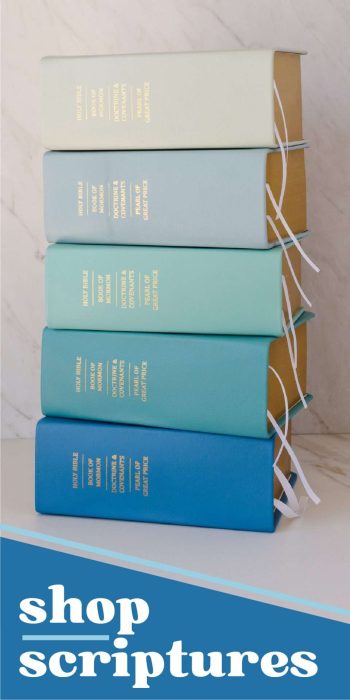
For scriptures that remain usable but have a worn exterior, a slip cover offers a way to change the outside while keeping the familiar pages and notes. LDS Bookstore offers simulated leather slip covers for Bibles, triple combinations, regular quads, and large quads, along with button-snap options for regular quads.
The button-snap version also includes a pencil holder attachment, which may appeal to readers who regularly write in their scriptures. Several options allow personalization for an additional fee, though choosing the right fit should come before choosing a color or adding a name.
Measure your actual scriptures rather than relying only on the words “regular” or “large.” The supplied regular-quad listing specifies a 7½-by-5¼-inch cover and a 2½-inch spine, while the large-quad listing specifies a 9½-by-6¼-inch cover.
A Bible and a triple combination can have similar cover dimensions while still needing different products because of their thickness and construction. Check the listing for your particular volume, and ask about compatibility if your set is older or its measurements do not clearly match.

Ask About Recovering Before Sending Scriptures Away
If you would prefer to replace the existing cover, LDS Bookstore also lists a send-in rebinding service for regular quads. That gives readers another option to investigate when they want to retain their own marked pages rather than begin with a new set.
The service has an important limitation: its listing excludes repairs to spines, pages, page gilding, and damaged tabs. Someone whose scriptures are literally coming apart should therefore contact the store about their condition before ordering or mailing them.
Explain the damage specifically and ask what the finished result would address. Replacing a worn cover may be exactly what you need, but knowing the service’s scope beforehand helps you decide whether additional repair expertise is necessary.
Keep the Old Set Even if You Begin a New One
Sometimes a new set makes everyday reading easier, especially when the old one has become difficult to handle. You can still keep the original for its notes, inscriptions, and personal history without transferring every marking before you begin studying again.
If you decide to move selected notes into a new set, start with the ones you actually use. Copying a helpful cross-reference or an insight you want to remember can become part of your ongoing study instead of a large assignment you have to finish first.
Your next step can be small: photograph an inscription, check the condition of the binding, or measure the cover before browsing LDS Bookstore’s scripture slip covers. Those few minutes can help you choose a useful solution while preserving the words you would miss most.
What is one note, inscription, or marking that makes your set of scriptures especially meaningful to you? Share your thoughts in the comments!

Holly Wallace is a writer and storyteller drawn to meaningful questions and overlooked details. Her work explores Latter-day Saint life and culture through faithful inquiry, inviting readers to pause, consider, and engage more deeply with what matters most.